Why India’s EV Charging Station Market Is Entering Its Most Critical Decade
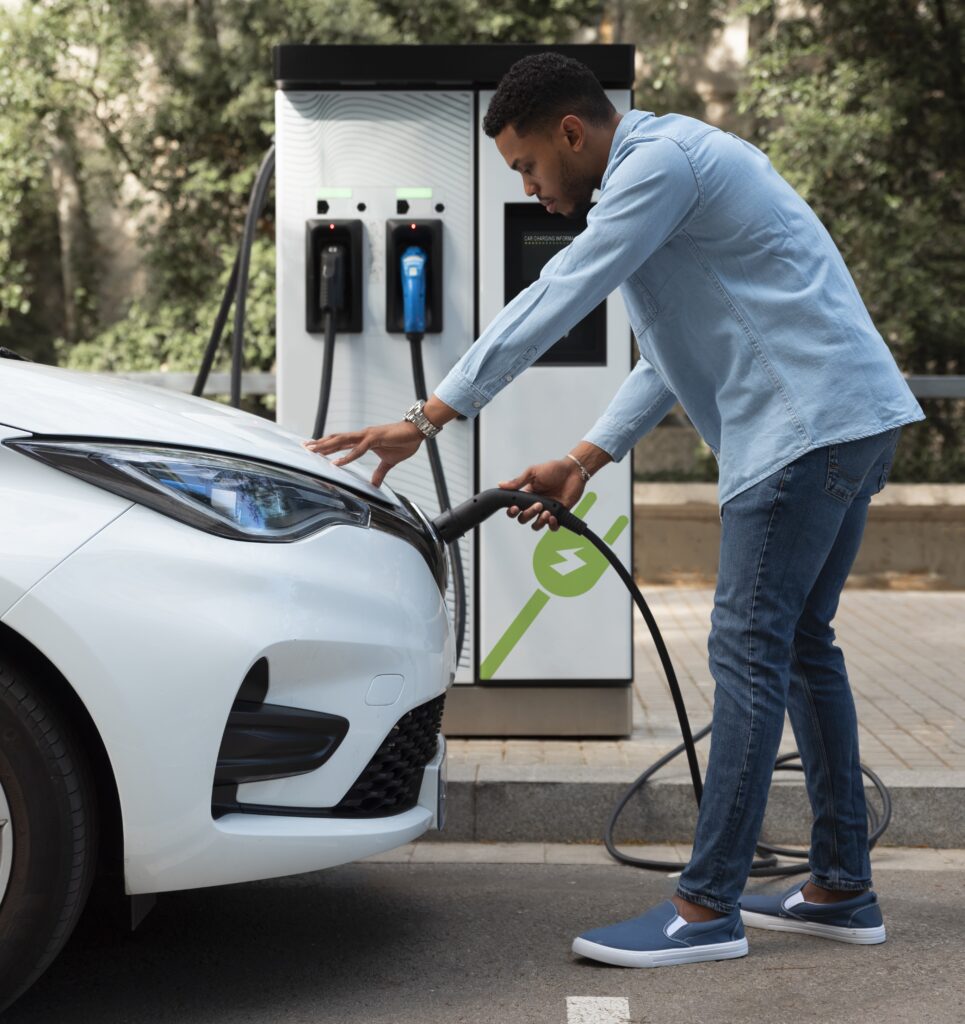
India’s EV charging station landscape is shifting faster than any other developing region. Between 2020 and 2024, growth was slow and policy-driven. But from 2025 onward, India enters a high-growth, infrastructure-heavy decade powered by state incentives, private investment, fleet electrification, and falling battery costs.
For market research professionals, the next 10 years are expected to define the long-term shape of India’s EV market — from charging density to grid capability and regional investment hotspots.
What Has Driven India’s EV Charging Growth So Far?
India has crossed 10,000 public EV charging stations as of 2025 (public + semi-public). Although this remains small for a market of India’s scale, the growth rate is above 70% year-on-year, driven by urban demand, fleet electrification, and policy acceleration.
The backbone of India’s charging adoption continues to be:
1. Rapid EV Adoption Across Two- & Three-Wheelers
India’s EV revolution is led by 2W and 3W segments, which account for most new EV registrations. This creates high demand for low-cost, fast-install charging points, especially in Tier-II & Tier-III cities.
(Source: NITI Aayog EV Handbook)
2. National Policies Boosting Charging Networks
- FAME I & II Subsidies for public charging
- State EV Policies (Delhi, Maharashtra, Tamil Nadu, Karnataka leading)
- GST reduction on EV chargers (18% → 5%)
(Source: NITI Aayog, KVIC EV Charging Project Profile)
3. Private Sector Investment Accelerating Deployment
Oil marketing companies (IOCL, BPCL, HPCL), automakers (Tata Motors, Mahindra), and energy players like Jio-BP are rolling out charging corridors on highways.
How the Indian EV Charging Station Market Will Transform by 2030–2035
Why Tier-2 & Tier-3 Cities Will Dominate New Installations
Cities like Jaipur, Lucknow, Indore, Surat, Vijayawada, and Coimbatore are expected to see the fastest charging-growth due to:
- Higher 2W/3W EV usage
- Lower land & installation costs
- Faster adoption of shared mobility
How Fast Charging Will Become the Default Standard
India will shift from slow AC charging to DC fast charging due to:
- E-commerce fleet electrification
- Intercity travel demand
- Rising number of electric SUVs & premium EVs
According to IEA’s Global EV Outlook 2025, fast charging installations across emerging markets may grow 4–6× by 2030.
What Grid Modernization Will Mean for Charging Networks
India’s grid will need upgrades to handle EV load clusters. Emerging solutions include:
- Smart load balancing
- Time-of-day charging tariffs
- Solar-powered charging
- Battery-swapping integration
(Source: IEA EV Charging Report 2025)
Regional Breakdown: Where India’s EV Charging Market Will Grow Fastest
1. Southern India (Tamil Nadu, Karnataka, Telangana)
- Bengaluru is India’s most advanced EV ecosystem, driven by tech startups & fleet operators.
- Tamil Nadu’s factories (battery + EV manufacturing) attract charging-infra investment.
- Hyderabad is rapidly building a city-wide charging grid.
- Strong manufacturing base
- Early EV-friendly policies
- High urban EV adoption
Expected CAGR (Charging Infra): 25%–32%
2. West India (Maharashtra, Gujarat)
- Maharashtra leads in fast-charging projects and has strong private-sector participation.
- Gujarat benefits from industrial clusters and early EV adoption in tier-2 cities.
- Strong highway connectivity
- Leading EV fleets
- High investment potential
Expected CAGR: 22%–28%
3. North India (Delhi NCR, Punjab, Rajasthan)
- Delhi remains India’s top EV-ready region with the highest density of public chargers.
- Gurgaon & Noida are emerging as commercial EV hotspots.
- State EV policies offer purchase subsidies + reduced electricity tariffs.
- Dense ride-hailing EV networks
Expected CAGR: 18%–24%
What Market Researchers Should Track in 2025–2035
1. Fleet Electrification (E-commerce, Delivery, Ride-hailing)
Zomato, Swiggy, Amazon, BigBasket, Uber, and BluSmart will be the largest charging consumers.
2. Battery Technology Shifts
The rise of LFP, sodium-ion, and solid-state batteries will change charging speeds and station types.
3. Highway Charging Corridors
India’s “Green Highway” push will create connected DC fast-charging corridors on:
- Delhi–Jaipur
- Mumbai–Pune
- Bengaluru–Hyderabad
- Chennai–Coimbatore
4. The Rise of Smart Charging
Expect:
- App-based reservation
- Smart billing
- Charging data analytics
- Demand-response charging
India’s EV Charging Station Market Is Only at 10% of Its True Potential
India is entering a period where infrastructure, policy, private investment, and consumer adoption are aligning at the same time. For market researchers, this ecosystem offers a rare opportunity to track a high-growth industry shaping the next 20 years of mobility.
India is not simply catching up — it is building one of the world’s most diverse EV charging ecosystems, with unique challenges and major global opportunities.
Policy Landscape: What’s Supporting India’s EV Charging Growth?
India’s policy push is stronger than ever. Key frameworks include:
1. FAME-II & Upcoming FAME-III
- Support for charging infrastructure across cities & transit points
- Incentives for battery-swapping + fast-charging projects
2. State-Level EV Policies
States like Delhi, Maharashtra, Tamil Nadu, and Telangana provide:
- Capital subsidies for charging stations
- Reduced GST for charging equipment
- Special electricity tariffs
- Faster approval windows for installation
3. NITI Aayog’s EV Charging Guidelines
The government has simplified norms to encourage private and public charging investments.
4. Grid Modernization & Tariff Reform
Utilities are aligning to support EV load demand, nighttime charging incentives, and behind-the-meter solutions.
→ Combined impact: Policy certainty is making EV charging one of India’s most investor-friendly clean-energy sectors.
Future Outlook: India’s EV Charging Market by 2030
India needs 1.3–1.5 million public chargers by 2030 to support expected EV penetration.
Key future drivers:
- Hyper-growth in e-two-wheelers (delivery + personal commute)
- Electrification of buses and ride-hailing fleets
- Expansion of highway fast-charging hubs
- Battery-swapping infrastructure for commercial vehicles
- Private investments & foreign capital entering the market
By 2030, India’s EV charging station market could cross USD 20–25 billion, largely fueled by the commercial charging opportunity rather than domestic home charging.
Sources (Referenced for Insights)
- https://gridx-public.s3.eu-central-1.amazonaws.com/gridX+Charging+Report+2025.pdf
- https://www.iea.org/reports/global-ev-outlook-2025/electric-vehicle-charging
- https://www.niti.gov.in/sites/default/files/2023-02/EV_Handbook_Final_14Oct.pdf
- https://www.kviconline.gov.in/pmegp/pmegpweb/docs/commonprojectprofile/EVChargingStation.pdf
- https://theicct.org/wp-content/uploads/2024/10/ID-239-%E2%80%93-E-DRIVE-charging_final.pdf